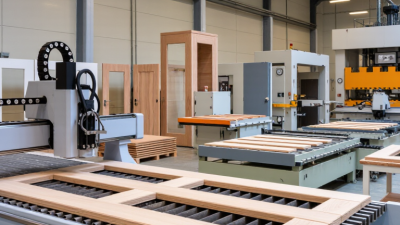
Top 10 Types of Door Assembly Machines for Global Buyers
Global door production is becoming more automated, but buyers still face an uneven market. A modern Door Assembly Machine may combine frame positioning, hinge installation, drilling, fastening, adhesive application, and final inspection. Some systems handle one door size. Others switch between wood, steel, aluminum, and composite models with limited manual adjustment.
The International Federation of Robotics reported 541,302 industrial robots were installed worldwide in 2023. Its World Robotics 2024 report also shows that automation demand remains strong, despite regional market fluctuations. Deloitte’s 2023 Smart Manufacturing Survey found that 86% of manufacturing leaders expect smart manufacturing to become a major competitiveness factor within five years. These figures do not measure door assembly directly. They still reveal the pressure behind equipment investment.
Manufacturing entrepreneur Elon Musk once wrote, “Yes, excessive automation at Tesla was a mistake. To be precise, my mistake. Humans are underrated.” That warning matters when selecting a Door Assembly Machine. A fast line can still produce expensive defects if doors are misaligned by two millimeters. Buyers should inspect cycle time, changeover minutes, servo accuracy, safety architecture, spare-part access, and operator training. The cheapest quotation may hide complicated maintenance.
This guide reviews ten major types of Door Assembly Machine systems for global buyers. It compares practical applications, automation levels, material compatibility, and expected purchasing risks. The categories are useful, but not perfect. Factory layout, labor skills, door design, and regional service support can change the final decision. A machine that performs beautifully in one plant may struggle beside another plant’s dusty cutting station.
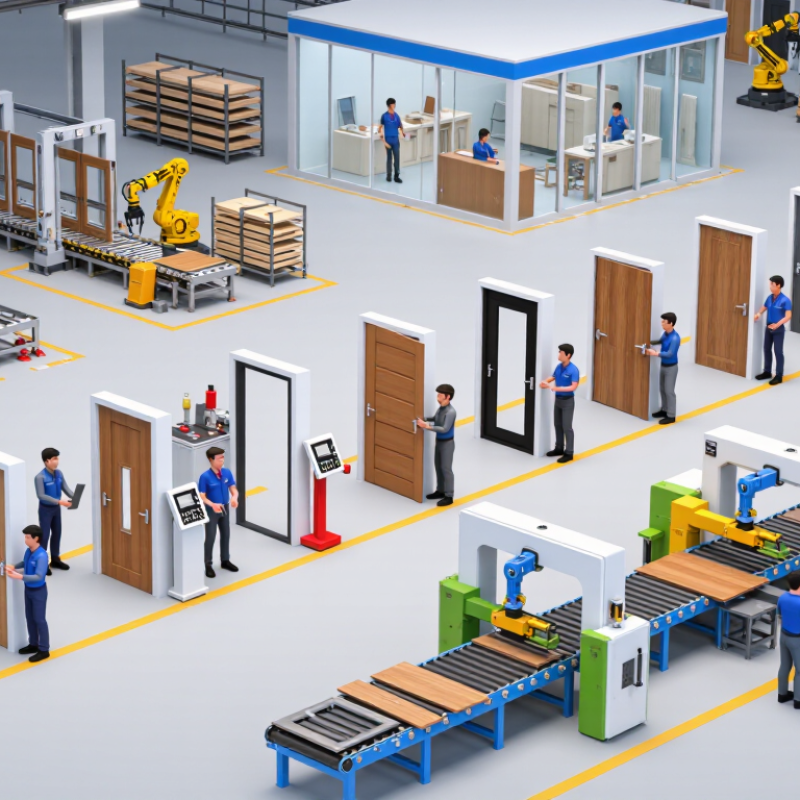
Door Assembly Machine Categories and Global Buying Criteria
Door assembly machines fall into distinct categories, and each solves a different production problem. Frame assembly machines align rails and stiles with controlled pressure. Panel presses create even bonding across wide surfaces. Hinge drilling, lock mortising, and hardware insertion machines improve repeatability. Other useful types include edge-banding, glazing, sanding, finishing, and inspection machines.
Global buyers should match the machine to door material, dimensions, and expected output. Solid wood, engineered panels, metal skins, and composite doors require different clamping forces and tooling. Check working range, cycle time, positioning accuracy, and changeover speed. A machine that handles ten sizes may still waste time during manual adjustment. Request sample testing with your actual door components.
Electrical compatibility matters across markets. Confirm voltage, frequency, safety features, guarding, documentation, and operator training. Dust extraction and noise control also affect installation decisions. Ask about spare parts, remote support, maintenance intervals, and local service capacity. Do not judge value by purchase price alone. Downtime can cost more than the machine.
Factory experience remains important. Inspect finished samples and review quality records when available. A reliable supplier should explain limitations clearly, not promise perfect results. I would also allow space for future tooling and software updates. Some purchasing teams overlook this detail. That mistake becomes expensive later.
Door Cutting, Milling, and Component Preparation Machines
Global buyers often compare ten types of door assembly machines, but cutting and component preparation deserve close attention. Panel saws produce accurate blanks for solid wood or engineered panels. CNC routers mill lock pockets, hinge recesses, and decorative profiles. Edge-trimming machines remove uneven layers before assembly. Drilling units prepare handle holes, dowel points, and pilot openings. These operations shape the door before final fitting begins.
Milling quality depends on spindle stability, tool condition, and material support. A clean cut should show no burning, tearing, or fuzzy edges. Component preparation machines also include sanding systems, edge banders, mortisers, tenoners, and drilling centers. Each machine solves a different bottleneck. In real workshops, dust extraction is not optional. Fine particles can affect visibility, moving parts, and measurement accuracy. I have found that advertised speed means little without stable feeding and skilled setup. A small calibration error can misalign an entire door batch. No machine performs perfectly on every wood species.
Tips: Request sample processing before purchase. Test the exact door materials, thicknesses, and hardware locations. Check tool-change time, maintenance access, safety controls, and operator training requirements. Leave room for improvement; the first trial may expose weaknesses in your workflow.
Door Panel Pressing, Gluing, and Edge-Banding Machines
Top 10 Types of Door Assembly Machines for Global Buyers
Door assembly lines often combine panel pressing, gluing, and edge-banding equipment. These machines shape production quality before installation begins. A panel press applies even pressure across the door surface. Hydraulic, pneumatic, and servo-driven models suit different panel sizes and production volumes. Flatness matters. Uneven pressure can leave visible gaps, trapped air, or a weak bond. Experienced buyers check platen accuracy, pressure distribution, and loading access, not only advertised force.
Gluing machines control adhesive quantity, temperature, and application speed. Rollers, nozzles, and PUR or water-based adhesive systems require different maintenance routines. The correct choice depends on substrate, cycle time, and workplace conditions. A small excess of glue may stain edges and slow curing. Test panels should represent real wood moisture and surface variation. Laboratory results alone can mislead. Measure the bond.
Edge-banding machines finish exposed panel sides with PVC, veneer, or other suitable materials. Pre-milling, adhesive application, pressing, trimming, scraping, and buffing must stay aligned. Sensors improve repeatability, but they do not replace skilled adjustment. I have seen excellent equipment produce poor corners after rushed setup. Corners reveal problems. Buyers should request sample runs, noise data, spare-part lists, and operator training details. The uncomfortable question is simple: can local technicians maintain the line after installation? If not, the machine may become an expensive lesson.
Top 10 Types of Door Assembly Machines for Global Buyers - Door Panel Pressing, Gluing, and Edge-Banding Machines
| No. | Machine Type | Primary Function | Common Door Materials | Typical Working Range | Automation Level | Typical Applications |
|---|---|---|---|---|---|---|
| 1 | Door Panel Cold Press | Applies uniform pressure to bond veneers, laminates, skins, or decorative panels to a door core. | MDF, particleboard, plywood, veneer, HPL, PVC, and composite skins | Approx. 1,250–3,000 mm panel length; pressure commonly up to 25 kg/cm² | Semi-automatic to automatic | Interior doors, cabinet doors, flush doors, and laminated panels |
| 2 | Door Frame Assembly Press | Squares and joins stiles, rails, and mullions while adhesive joints cure. | Solid wood, engineered wood, MDF, and laminated components | Door frames generally up to 2,400 × 1,200 mm | Manual to semi-automatic | Wooden door frames, jambs, casing assemblies, and furniture doors |
| 3 | Door Panel Gluing Machine | Meters and spreads adhesive over flat surfaces or applies glue lines before pressing. | Wood, MDF, plywood, veneer, honeycomb cores, and laminate sheets | Working widths commonly 600–1,600 mm | Semi-automatic to automatic | Hollow-core doors, flush doors, veneered panels, and laminated assemblies |
| 4 | Door Edge-Banding Machine | Applies and trims edge tape to protect exposed panel edges and create a finished appearance. | MDF, particleboard, plywood, melamine panels, and compact boards | Edge thickness commonly 0.4–3 mm; panel thickness about 10–60 mm | Automatic | Interior doors, cabinet doors, flush panels, and decorative door components |
| 5 | Door Skin Laminating Press | Bonds steel, wood, MDF, or decorative skins to a prepared door core using heat or pressure. | Steel sheet, MDF, plywood, PVC, laminate, mineral core, and polyurethane core | Common panel sizes from 2,000 × 800 mm to 3,000 × 1,500 mm | Semi-automatic to automatic | Security doors, fire-rated doors, metal doors, and decorative entrance doors |
| 6 | Hot Press for Door Panels | Uses heated platens and pressure to shorten adhesive curing time and improve surface bonding. | Veneer, HPL, thermoplastic films, MDF, plywood, and composite panels | Operating temperatures often 60–150°C; multi-opening options available | Semi-automatic to automatic | High-volume door skin production, veneering, and decorative panel manufacturing |
| 7 | Door Core Filling Machine | Feeds, positions, or injects core material into the internal cavity before skin assembly. | Honeycomb paper, mineral wool, polyurethane foam, polystyrene, and wood strips | Suitable for standard interior and exterior door dimensions | Manual to automatic | Hollow-core, insulated, acoustic, fire-resistant, and lightweight doors |
| 8 | Door Profile Wrapping Machine | Wraps decorative film, veneer, or paper around door profiles, trims, and frame components. | PVC film, CPL, veneer, paper foil, MDF, and wood-plastic profiles | Profile widths commonly 10–300 mm; continuous-feed production | Automatic | Door casings, architraves, moldings, decorative strips, and frame profiles |
| 9 | Door Squaring and Clamping Machine | Aligns door components and clamps the assembly to maintain accurate diagonals and joint positioning. | Solid wood, engineered wood, MDF, plywood, and assembled door leaves | Commonly handles door leaves up to about 2,500 × 1,200 mm | Semi-automatic | Stile-and-rail doors, timber doors, painted doors, and pre-assembly lines |
| 10 | Door Sanding and Finishing Machine | Calibrates, sands, and prepares door faces or edges for painting, coating, or final assembly. | Solid wood, MDF, veneer, plywood, primer-coated panels, and composite boards | Working widths commonly 600–1,300 mm; adjustable sanding grit | Automatic | Paint-grade doors, veneered doors, molded panels, and final surface preparation |
Note: Working ranges are indicative industry ranges. Final specifications depend on door dimensions, material structure, adhesive system, production volume, and local electrical and safety requirements.
Door Frame Assembly, Welding, and Clamping Machines
Top 10 Types of Door Assembly Machines for Global Buyers
Door frame assembly, welding, and clamping machines form the core of many modern door production lines. Common types include frame positioning machines, hydraulic clamping systems, corner welding machines, spot welders, continuous welders, hinge assembly machines, panel pressing machines, glass fitting machines, screw fastening machines, and final inspection stations. Each machine addresses a different production stage. Together, they can improve alignment, repeatability, and operator safety.
A frame assembly machine holds vertical and horizontal profiles at accurate angles. Clamping machines apply steady pressure while workers or automated tools secure each joint. Welding machines then create consistent corner connections with controlled heat and timing. In a busy workshop, this reduces visible gaps and warped frames. However, speed alone is not enough. Poor profile preparation can still produce weak joints. I have seen accurate machines deliver disappointing results when fixture maintenance was ignored.
Tips: Check the frame material, profile dimensions, welding method, and required output before purchasing. Request sample tests with your actual profiles. Confirm spare-part access, electrical standards, guarding, and operator training. A machine may look efficient, yet unsuitable tooling can create costly rework. Leave space for adjustment. Real production is rarely as perfect as a catalog drawing.
Hardware Installation, Testing, and Final Assembly Machines
Top 10 Types of Door Assembly Machines for Global Buyers
Hardware installation, testing, and final assembly machines determine whether a door performs reliably after installation. A practical top-ten grouping includes hinge screwdrivers, lockset inserters, drilling machines, routing machines, glass fitting systems, sealant applicators, torque testers, vision inspection stations, cycle-testing machines, and final assembly lines.
In daily production, hinge alignment needs controlled drilling depth and repeatable screw torque. Lock hardware should seat flush, without damaging painted surfaces. Vision systems can detect missing screws, gaps, and incorrect handles within seconds. Torque tools create useful process records. These records support traceability across different factories and labor teams. The International Federation of Robotics reported 541,302 industrial robot installations worldwide in 2023. This figure shows growing automation capacity, but not every door line needs robots.
Testing equipment deserves equal attention. A cycle tester can repeatedly open and close a door under controlled speed and load. Air-leakage and water-spray stations expose seal failures before shipment. A door may pass visual inspection and still fail after thousands of cycles. That is an uncomfortable gap. Final assembly conveyors should control panel movement, packaging clearance, and operator access. Deloitte’s 2024 Smart Manufacturing Survey found that 86% of manufacturers expect smart manufacturing to support competitiveness within five years. Buyers should still verify local voltage, safety requirements, door weight, frame tolerance, and maintenance skills before selecting equipment. Automation is not automatically better. Poor calibration simply repeats mistakes faster.
Top 10 Types of Door Assembly Machines for Global Buyers
The chart compares representative cycle times for common door hardware installation, testing, and final assembly machines. Lower values indicate faster processing for a single door or door set; actual performance varies by door material, hardware specification, operator workflow, and production line configuration.
Typical applications include automated drilling, hinge and lock installation, screwdriving, weatherstrip fitting, glass bead assembly, door closer installation, dimensional inspection, hardware testing, and final assembly.
Related Posts
-
What Are Exterior Door Machines and How Do They Work?
-
7 Best Prehung Door Machines for Global Buyers
-

Understanding the Technical Specifications of Door Assembly Machines for Optimal Procurement Decisions
-
Why Choose Used Prehung Door Machinery for Global Sourcing?
-
Top 10 Door Machine Manufacturers from China at the 137th Canton Fair
-
What is the Best Door Machine for 2026 Top Types?