Top Tips for Choosing Braiding Wire Cable for Your Projects?
Choosing the right Braiding Wire Cable for your projects is crucial for ensuring optimal performance. According to a report by the International Cable and Connectivity Association, over 70% of cable failures can be traced back to poor quality materials. This highlights the importance of selecting high-quality braiding wire cable.
Expert in the field, Dr. Emily Nolan, emphasizes, "The right cable can significantly enhance project efficiency." Reliable braiding wire cable offers not only strength but also durability. Look for options that resist corrosion and maintain flexibility in various environments.
When exploring options, consider the specific requirements of your project. Each application demands a different type of braiding wire cable. Factors like temperature resistance and tensile strength play significant roles. Balancing these elements can be challenging but is essential for long-lasting results. A misstep in choice can cost both time and resources.
Understanding Braiding Wire Cable: Types and Applications
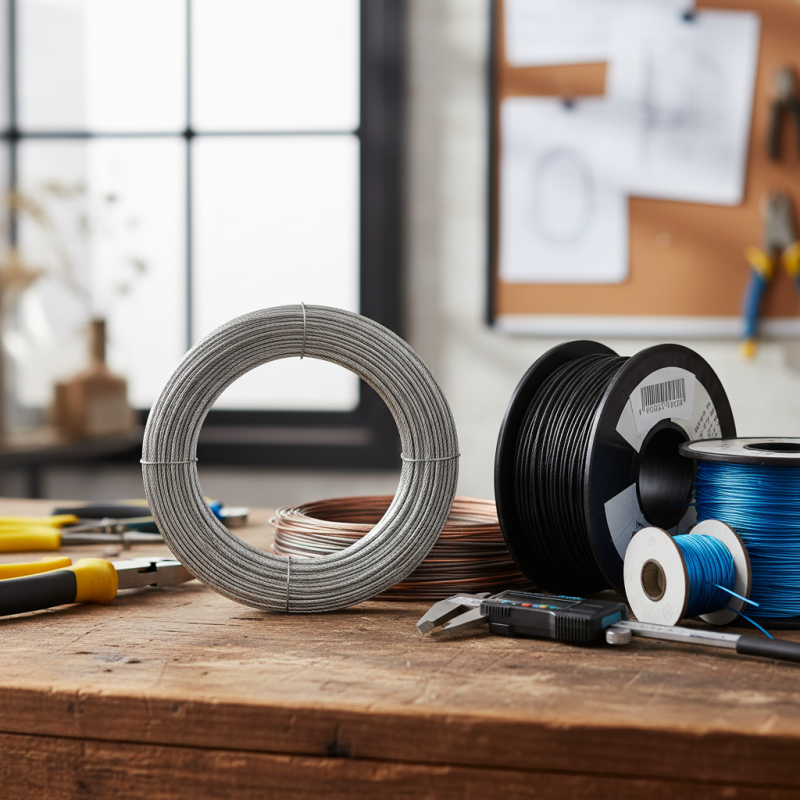
Braiding wire cable is essential in various applications, from electronics to automotive components. Understanding the types available can help users make informed choices. Common types of braiding wire cable include copper, aluminum, and stainless steel. Each has its unique properties that cater to different needs. For instance, copper is known for its excellent conductivity, while aluminum is lighter and more cost-effective.
Recent industry reports indicate that the global braided cable market is expected to grow at a CAGR of approximately 5.3% over the next five years. This growth is driven by the increasing demand for lightweight and flexible wiring solutions. Applications span across telecommunications, aerospace, and industrial equipment. In telecommunications, for example, braided cables reduce interference and are vital for high-speed data transfer.
When selecting cable, consider the environment it will be used in. Factors like temperature, exposure to chemicals, and mechanical stress can affect performance. Not all cables are suitable for high-stress environments. Some might fray or degrade faster than expected. Always reflect on the specific requirements of your project. Understanding these nuances can guide better choices and reduce the risk of costly mistakes.
Top Tips for Choosing Braiding Wire Cable for Your Projects
This chart illustrates the different types of braiding wire cables and their common applications. Understanding these variations can help you make informed decisions for your projects.
Key Factors to Consider When Selecting Braiding Wire Cable
When selecting braiding wire cable for your projects, several key factors deserve careful consideration. The material is essential; copper remains a top choice due to its excellent conductivity and flexibility. According to industry data, copper cables can have conductivity ratings exceeding 100% IACS (International Annealed Copper Standard), which enhances performance in various applications.
Next, consider the cable's insulation. Different environments may require specific types of insulation materials. For instance, PVC and Teflon offer distinct benefits. PVC is cost-effective and flexible, while Teflon resists high temperatures and chemicals. The choice often depends on your project's demands. Over 25% of project failures cite inadequate insulation as a contributing factor.
Lastly, evaluate the cable's diameter and braiding type. A tighter braid increases durability and reduces electromagnetic interference. It's crucial to align these specifications with your project's requirements for optimal results. Industry reports indicate that improper cable selection can lead to up to a 30% decrease in efficiency. Noting these factors can help steer your project toward success.
Top Tips for Choosing Braiding Wire Cable for Your Projects
| Key Factor | Details |
| Wire Diameter | Consider the thickness of the wire for electrical current capacity. |
| Material | Choose between copper, aluminum, or other materials based on conductivity and weight. |
| Insulation Type | Select insulation that suits environmental conditions (e.g., heat resistant, moisture proof). |
| Flexibility | Determine the required flexibility for installation and movement in applications. |
| Stranding Configuration | Assess the stranding pattern for strength and flexibility benefits. |
| Load Capacity | Ensure that the cable can handle the required electrical load for your project. |
| Temperature Rating | Check the temperature rating for compatibility with operating conditions. |
| Regulatory Compliance | Verify that the cable meets necessary industry standards and regulations. |
Material Composition: Copper vs. Aluminum Braiding Wire Cables
When selecting braiding wire cable, the material composition plays a crucial role. Copper and aluminum are the two main options available in the market. Copper is known for its superior conductivity, typically rated at 58% better than aluminum. This makes copper ideal for applications requiring high-performance wiring, especially in the electronics sector.
However, aluminum offers advantages that shouldn't be overlooked. It is lighter and more cost-effective compared to copper. Reports indicate that aluminum wiring can reduce installation costs by up to 30%. Additionally, aluminum has a higher thermal conductivity, making it suitable for applications that involve heat dissipation.
Despite their benefits, each material has its drawbacks. Copper's higher cost can strain budgets, especially for large projects. On the other hand, aluminum is prone to oxidation, leading to potential connectivity issues over time. It's essential to assess the project's specific needs. Consider factors like load requirements and environmental conditions. This careful evaluation ensures optimal performance and longevity of the chosen wire cable.
Assessing Electrical Ratings and Performance for Your Projects
When selecting braiding wire cable, understanding electrical ratings is crucial. Most projects require specific voltage and current ratings. For instance, low-voltage applications typically use cables rated for 300V or less. According to the National Electrical Manufacturers Association (NEMA), using a wire with inadequate ratings can lead to overheating and performance issues. It is vital to match the cable's rating with your project's requirements.
Performance is another key factor. Resistance, capacitance, and inductance impact signal integrity. A report from the Institute of Electrical and Electronics Engineers (IEEE) highlights that cables with lower resistance offer better efficiency. For high-frequency applications, selecting cables with minimal capacitance is essential. This ensures reduced signal loss and improved performance.
Evaluating the environment is also important. Cables may face exposure to moisture, chemicals, or extreme temperatures. This can affect their durability and longevity. The Underwriters Laboratories (UL) provides standards for cable ratings in harsh environments. Understanding these standards helps in choosing the right cable for your conditions.
Cost-Effective Solutions: Balancing Quality and Budget in Wire Selection
Choosing the right braiding wire cable is essential for any project. Balancing quality and budget can be challenging. According to a report by the International Wire and Cable Association, over 30% of projects fail due to poor wire selection. This emphasizes the importance of making informed choices.
When considering cost-effective solutions, it’s crucial to understand the materials used in wire production. High-quality copper wiring, for example, offers excellent conductivity. However, it may come at a premium price. Alternatively, aluminum wires can be more affordable but often result in higher resistance and heat generation. The decision affects both performance and safety.
Budget constraints can lead to compromise. Some may opt for cheaper wire to save money upfront. Unfortunately, this choice can lead to long-term expenses. Frequent replacements, maintenance costs, and potential project delays add up. Inaccurate expectations may arise when product specifications do not meet real-world conditions. Striking a balance between price and quality is vital. An investment in better wire can save costs in the long run. Therefore, understanding the project requirements is key.