2026 Top Center Bearing Types and Their Benefits Explained?
In the world of automotive engineering, the "Center Bearing" plays a crucial role in vehicle stability and performance. According to Dr. James Reeve, a leading expert in automotive components, "The right Center Bearing can greatly enhance the lifespan of drivetrain systems." As we approach 2026, understanding the various types of Center Bearings and their specific benefits becomes essential for both manufacturers and consumers.
Many may overlook the significance of this component. A sturdy Center Bearing can reduce vibration and contribute to a smoother ride. When choosing the right type, factors like load capacity and durability are key. Visually, one can identify different designs based on their construction and materials. The choices can be overwhelming, but focusing on quality is vital.
However, it's important to acknowledge that not every Center Bearing will work perfectly for every application. Some may experience wear sooner than expected, highlighting the need for continuous evaluation. As the technology evolves, reflecting on past choices will guide better decisions for future innovations in this field.
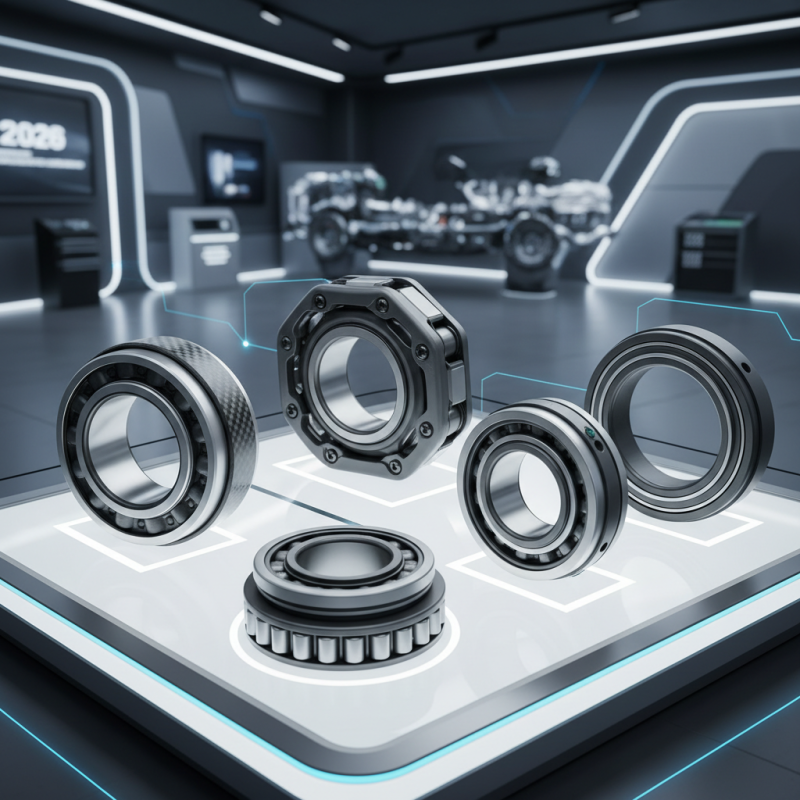
2026 Overview of Top Center Bearing Types in the Market
In 2026, the market for center bearings is diverse and competitive. Industry reports indicate a significant demand for high-performance center bearings. These components support the rotation of shafts and reduce vibration, playing a crucial role in various machinery. The versatility of these bearings is notable. They can be used in automotive, aerospace, and industrial applications.
One of the most common types is the mounted ball bearing. This design can handle both axial and radial loads. It is cost-effective and widely available. However, improper installation can lead to premature failure. This highlights the importance of precision in applications. Moreover, roller bearings are increasingly popular. They offer higher load capacities but can be more complex to maintain.
Research shows that the market for center bearings is projected to grow steadily. Analysts predict an annual growth rate of over 5% through 2026. The push for efficient machinery is a significant factor. Despite these advancements, challenges persist. Many manufacturers struggle with quality control. Ensuring that each bearing meets stringent standards can be cumbersome. The industry must address these flaws while embracing new technologies.
2026 Overview of Top Center Bearing Types 2026 Overview of Top Center Bearing Types and Their Benefits
This chart presents an overview of the top center bearing types available in the market as of 2026 and their corresponding benefits scores. Each type of bearing brings unique advantages suitable for different applications and industries, providing insight into their overall performance and usability.
Key Characteristics of Ball Bearings and Their Applications in Industry
Ball bearings are essential components in various industries. They reduce friction between moving parts, enhancing efficiency. Their key characteristics include smooth operation, durability, and load capacity. A research report from the International Journal of Mechanical Engineering highlights that ball bearings can improve machine performance by up to 20%.
In manufacturing, ball bearings are commonly used in electric motors and conveyor systems. These applications require reliable performance under continuous operation. With the right type of ball bearing, businesses can reduce maintenance costs. For instance, ensuring minimal downtime is crucial for production lines. However, not all ball bearings perform equally in different environments.
Selecting the wrong type can lead to higher friction and wear. This is where attention to detail becomes vital. Companies should assess their operational conditions before choosing bearing types. Each application's unique demands can dictate performance. The variability in materials and design directly affects efficiency and lifespan.
Comparative Benefits of Roller Bearings vs. Ball Bearings in 2026
In 2026, the choice between roller bearings and ball bearings remains crucial for various applications. Data from industry reports indicate that roller bearings offer a higher radial load capacity compared to ball bearings. Roller bearings can handle heavy loads, making them ideal for heavy machinery. However, they may not perform as well in high-speed applications.
Ball bearings, on the other hand, excel in speed and efficiency. They produce less friction, resulting in smoother operation. Recent studies reveal that ball bearings hold roughly 40% of the share in the bearing market for high-speed applications. Their smaller size allows for more compact designs. Yet, they may wear out quicker under high load conditions.
Materials and specifications also play a critical role. Many manufacturers are now experimenting with hybrid solutions to combine the benefits of both types. For example, using ceramic balls in steel races can enhance durability. Still, there are uncertainties regarding long-term performance. The industry must continue to innovate, addressing the balance between load capacity and speed, recognizing the limitations of both bearing types.
Innovations in Center Bearing Materials for Enhanced Performance
Innovations in center bearing materials are shaping the future of performance. Lightweight composites and advanced polymers are increasingly popular. These materials offer superior strength and flexibility, reducing vibration levels in various applications. The ability to withstand extreme temperatures is crucial for durability.
Some recent advancements focus on hybrid materials. Combining the best features of metal and plastic, they exhibit remarkable resilience. However, not all innovations work seamlessly. Challenges related to cost-effectiveness and scalability remain. Manufacturers often face difficulties maintaining quality while pushing for higher production rates.
The benefits of these advancements are significant. Enhanced performance leads to improved vehicle efficiency. Reduced noise levels contribute to a better user experience. Still, the ongoing research is necessary. Finding a perfect balance between innovation and practicality is essential. The road ahead is full of potential, yet it requires careful navigation.
Statistical Trends: Center Bearing Market Growth and Future Predictions
The center bearing market is experiencing significant growth. According to a market report, the sector is projected to expand at a compound annual growth rate (CAGR) of 5% through 2026. This growth is largely driven by increasing demand in automotive and industrial sectors. As manufacturers seek efficiency, innovative bearing designs are rising.
Statistical analysis indicates that North America and Asia Pacific hold substantial market shares. North America is expected to witness a growth rate of about 6% during the forecast period. Meanwhile, Asia Pacific is rapidly becoming a hub for bearing production. This shift is visible in emerging manufacturing hubs, where investments are pouring in. However, the market faces challenges.
Rapid technological advancements push the need for continual upgrades. Cost management remains a concern for many manufacturers. The market's dependency on raw material prices adds uncertainty. In light of these factors, companies must adapt their strategies. Balancing innovation and cost-effectiveness will be crucial to thrive in this evolving landscape.