7 Tips for Choosing Door Manufacturing Machines?

Choosing Door Manufacturing Machines is a production decision, not merely a purchasing exercise. The right machine must match your door designs, materials, output targets, floor space, and workforce. A machine that performs beautifully in a supplier’s showroom may struggle with hardwood frames, narrow profiles, or changing order sizes.

Quality expert Dr. Joseph Juran famously said, “Quality does not happen by accident. It has to be planned.” His principle applies directly to door manufacturing equipment. Before comparing prices, examine cutting accuracy, machining speed, software compatibility, dust extraction, maintenance access, and operator safety. Small details matter. A poorly positioned control panel can slow every shift. Weak dust collection can affect finishes and maintenance. Limited after-sales support can create costly delays.

This guide introduces seven practical tips for choosing Door Manufacturing Machines with greater confidence. It considers both technical performance and daily factory experience. The cheapest machine may appear attractive. It may also become an expensive regret. Likewise, the most advanced model may exceed your real production needs. That is where many buyers misjudge the investment.

A thoughtful decision begins with honest questions. How many doors will you produce each month? Which materials will you process? Can the machine grow with your business? No checklist replaces a trial run. If possible, test your own materials before signing an order. Review sample tolerances, cycle times, noise levels, and finishing quality. Some assumptions will prove wrong. That is useful. Careful reflection often prevents a machine choice that looks efficient on paper but fails during ordinary production.
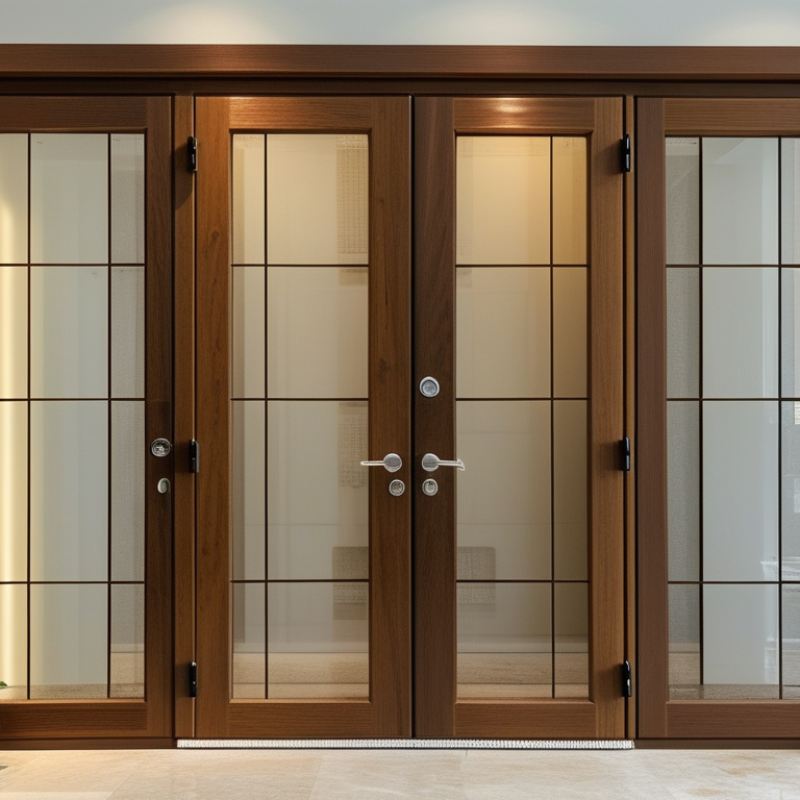
7 Tips for Choosing Door Manufacturing Machines?

Assess Your Door Production Requirements

Before choosing door manufacturing machines, measure your actual production requirements. Record door height, width, thickness, core material, and daily output. A machine designed for solid timber may perform poorly with composite panels or metal skins.

The International Energy Agency’s Energy Efficiency 2023 report states that buildings consume about 30% of global final energy. That figure makes insulation, sealing, and dimensional accuracy important. If your doors require insulated cores, confirm the machine’s bonding pressure and curing control. For frequent custom orders, flexible CNC routing may matter more than maximum speed. For standardised batches, automated cutting and edge processing can reduce handling time. Measure twice.

The U.S. Department of Energy reports that buildings represent roughly 40% of U.S. energy use. This supports closer attention to frame joints, weather seals, and thermal performance during production. Ask suppliers for tolerance data, maintenance intervals, dust-control requirements, and operator training details. Do not rely only on catalogue speed. Real output often falls when changeovers, inspection, and material loading are included. A small pilot run can reveal bottlenecks that a spreadsheet misses. My own assessment would include rejected panels, blade wear, and floor space. These details seem minor, but they can reshape the entire equipment budget.

Choose the Right Type of Manufacturing Machine

Choosing the Right Type of Door Manufacturing Machine

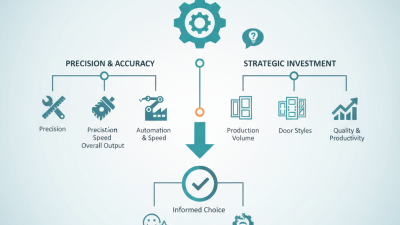
A door factory should choose machines by material, volume, and required accuracy. Solid wood doors need stable saws, CNC routers, and sanding systems. Composite doors may require cutting, drilling, and edge-processing equipment. A machine designed for one material can perform poorly on another. Measure door thickness, panel size, daily output, and tolerance before comparing specifications.

Tip 1: Match the machine to your production mix. High-volume lines benefit from automated loading and continuous processing. Small workshops may gain more from flexible CNC equipment. The International Federation of Robotics reported 541,302 industrial robot installations worldwide in 2023, a 10% annual increase. This suggests automation is expanding, but it does not make every automated machine suitable.

Tip 2: Check accuracy under real working conditions. Request sample testing with your actual timber, laminate, or composite panels. Inspect edge quality, dust control, tool-change time, and operator access. The U.S. Department of Energy notes that motor-driven systems can represent a major share of industrial electricity use. Therefore, compare standby consumption and compressed-air demand, not only purchase price. A cheaper machine may become expensive during long shifts.

Tip 3: Review serviceability before signing. Ask for maintenance intervals, spare-part availability, training, and fault records. ISO 230-1 provides methods for evaluating machine-tool accuracy, yet factory conditions still matter. Temperature, dust, and poor calibration can change results. This is where many purchasing plans become too optimistic. Leave room for operator learning and imperfect production days.

Compare Machine Specifications and Production Capacity

Compare Machine Specifications and Production Capacity

A door machine should match your daily mix, not just its maximum speed. Compare cutting length, spindle power, panel thickness, positioning accuracy, and tool-change time. The International Federation of Robotics reported 541,302 industrial robots installed worldwide in 2023. This signals wider automation, but automation alone does not guarantee useful output. Check whether the machine handles your actual door sizes, core materials, and hardware locations. A 3,000-millimeter working length may look impressive. It means little if your panels average 2,100 millimeters.

Calculate capacity from the complete cycle. Include loading, drilling, tool changes, inspection, and unloading. If one door needs 12 minutes, theoretical capacity reaches five doors hourly. With 85% availability, the practical figure falls to about four doors. Vorne’s OEE benchmark identifies 85% as a world-class reference, though many small factories operate below it. Measure your own downtime honestly. I once overestimated output by ignoring manual edge finishing. The spreadsheet looked excellent. The workshop did not.

Reports from The Freedonia Group identify replacement demand and remodeling as important drivers for millwork equipment investment. That makes flexibility valuable. Compare automatic tool calibration, quick program changes, dust extraction, and service access. Ask for test-cut evidence using your materials. Examine the finished edge under bright light. A specification sheet cannot show vibration, operator fatigue, or software delays. Record cycle times across several shifts, then compare them with quoted capacity. The uncomfortable gap often reveals the better machine.

7 Tips for Choosing Door Manufacturing Machines? - Compare Machine Specifications and Production Capacity

Tip Machine Type Key Specifications to Compare Typical Specification Range Typical Production Capacity Best Application What to Verify Before Purchase
1 CNC Router Working area, spindle power, positioning accuracy, tool-changing system, and vacuum table size. Working area: 1,300 × 2,500 to 2,100 × 3,100 mm; spindle: 6–12 kW; accuracy: approximately ±0.05–0.10 mm. Approximately 30–100 door panels per 8-hour shift, depending on design complexity and material. Routing grooves, raised panels, hinge recesses, drilling, and decorative door patterns. Test the machine with the actual door material, tooling, design files, and required cutting depth.
2 Panel Saw Maximum cutting length, cutting height, saw-blade diameter, motor power, and automatic feeding. Cutting length: 3,200–5,600 mm; cutting height: 50–100 mm; main motor: 5.5–15 kW. Approximately 80–250 panels per 8-hour shift, depending on nesting, loading, and cutting patterns. Sizing solid wood panels, MDF, plywood, laminate boards, and door blanks. Check cut repeatability, edge quality, dust extraction, blade availability, and operator safety features.
3 Edge Banding Machine Feed speed, panel thickness range, edge-material thickness, glue system, trimming, scraping, and polishing units. Feed speed: 10–25 m/min; panel thickness: 10–60 mm; edge thickness: approximately 0.4–3 mm. Approximately 150–500 linear meters of edge banding per 8-hour shift. Finishing exposed edges on laminated, veneered, and engineered-wood door components. Confirm compatibility with PVC, ABS, veneer, and solid-wood edging, as well as glue-changeover time.
4 Hot Press Pressing area, pressure, heating method, temperature uniformity, cycle time, and number of working levels. Pressing area: 1,300 × 2,500 to 1,600 × 3,200 mm; pressure: 0.4–0.8 MPa; temperature: up to approximately 120°C. Approximately 40–160 door skins or panels per 8-hour shift, depending on cycle time and loading method. Laminating veneer, PVC film, decorative paper, or other surface materials onto door panels. Measure pressure and temperature consistency across the entire platen and verify the required adhesive process.
5 Sanding Machine Working width, sanding belt dimensions, abrasive speed, feed speed, calibration accuracy, and dust collection requirements. Working width: 600–1,300 mm; feed speed: 5–20 m/min; sanding motors: approximately 7.5–30 kW. Approximately 100–350 door panels per 8-hour shift, depending on sanding passes and surface condition. Calibrating thickness and preparing wood, MDF, veneer, or coated door surfaces for finishing. Check thickness tolerance, abrasive replacement cost, dust extraction volume, and finish requirements.
6 Spray or Finishing Line Booth dimensions, spray method, conveyor speed, drying temperature, airflow, filtration, and coating recovery. Conveyor speed: 2–12 m/min; drying temperature: commonly 30–80°C, depending on the coating system. Approximately 80–300 door faces per 8-hour shift, depending on coating layers and drying time. Applying primer, paint, lacquer, stain, or protective coatings to interior and furniture doors. Verify coating compatibility, ventilation, fire protection, filtration efficiency, and local environmental requirements.
7 Door Assembly and Hardware Machine Hinge-cup drilling accuracy, lock-hole configuration, drilling depth, adjustable stops, and automatic positioning. Drilling speed: approximately 2,000–4,000 rpm; common hinge-cup diameter: 35 mm; positioning tolerance: about ±0.5 mm. Approximately 100–400 doors per 8-hour shift, depending on the number of hardware operations. Installing hinges, locks, handles, dowels, and other door hardware with repeatable positioning. Confirm compatibility with hardware dimensions, door thicknesses, drilling patterns, and required changeover times.

Note: Production figures are representative planning ranges for an 8-hour shift. Actual output depends on door size, material, design complexity, operator skill, setup time, tooling, maintenance, and quality-control requirements.

Evaluate Automation, Safety, and Energy Efficiency

7 Tips for Choosing Door Manufacturing Machines

Choosing door manufacturing machines requires more than comparing cutting speed or purchase price. Automation should match your actual production flow. A machine with automatic feeding, drilling, and panel positioning can reduce repetitive handling and improve consistency. However, excessive automation may create expensive downtime when operators lack training. Watch a full production cycle. Check whether one trained worker can load materials, monitor sensors, and correct small errors safely.

Safety needs practical testing, not attractive paperwork. Inspect guards, emergency stops, interlocks, noise levels, and dust extraction points. Ask operators to demonstrate routine maintenance while the machine is switched off. Their movements often reveal risks that specifications miss. Keep enough space around access doors and control panels. Small details matter.

Energy efficiency also deserves measurable attention. Request power consumption data during standby, normal cutting, and peak operation. Servo-driven systems, efficient motors, and automatic sleep settings can lower electricity use. Yet a low-rated machine may waste energy if it produces frequent rejects. Measure compressed-air demand too. Leaking hoses quietly increase operating costs. In one evaluation, a slower machine delivered better efficiency because it reduced rework and idle running. That result challenged our assumptions. Review actual output, maintenance records, and operator feedback before deciding. The cheapest energy label is not always the lowest long-term cost.

Review Total Costs, Maintenance, and Supplier Support

Choosing door manufacturing machines requires more than comparing purchase prices. In factory assessments, I have seen a low-cost machine create expensive delays. Review the total cost over five years. Include tooling, installation, training, energy, spare parts, software, and financing. Ask for a written cost model. It should show realistic production volumes, not optimistic estimates. Record your own labor rates and electricity prices. Small assumptions matter.

Maintenance deserves equal attention. Check cleaning points, lubrication schedules, calibration needs, and access to wear components. Request maintenance logs from comparable installations, when available. A machine that stops during a busy shift can cost more than its invoice suggests. Ask how quickly technical support responds and whether remote diagnostics are included. Clarify service hours, travel charges, response targets, and technician qualifications. Test the support process before signing. Send a technical question. Notice the reply quality and speed.

Supplier support should continue after delivery. Confirm operator training, documentation, commissioning, warranty limits, and upgrade policies. Ask who stocks critical parts and how long delivery normally takes. Speak with current users, but treat every reference carefully. One conversation is not proof. I also recommend a factory acceptance test using your door materials and target tolerances. It exposes awkward setup steps early. Leave room for doubt. Production conditions change, and my estimates have been wrong when scrap rates were ignored. Choose equipment with understandable costs, practical maintenance, and dependable support under pressure.

Search this website